
What is dermaplaning?
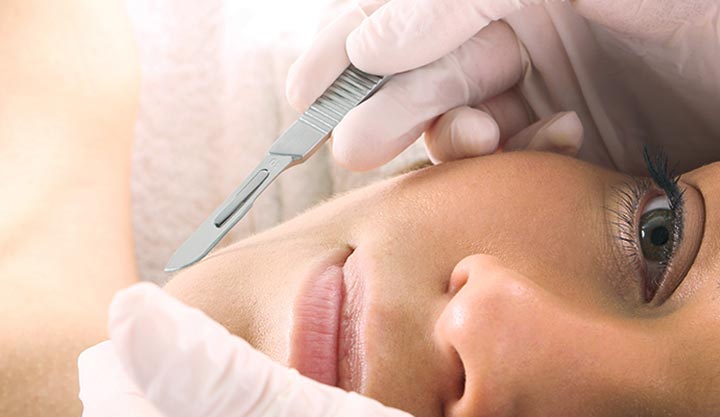
Dermaplaning is a minimally invasive cosmetic procedure for your skin. Your healthcare provider uses a special instrument to shave away the uppermost layers of your skin.
Dermaplaning can help reduce the appearance of acne scars or other skin imperfections by revealing newer, undamaged skin. It can make your skin look younger and clearer.
Most people get the procedure on their face, but you can do it anywhere on your body.
Dermaplaning vs. dermabrasion vs. microdermabrasion: What’s the difference?
Dermaplaning, dermabrasion and microdermabrasion are all skin resurfacing procedures. Each procedure uses different tools and takes off different amounts of skin. Dermaplaning uses a scalpel (knife) or razor to remove skin. Dermabrasion is a surgical procedure. Microdermabrasion is a nonsurgical procedure that uses an exfoliating blade to sand away your skin to smooth it and remove the appearance of scars.
Who gets dermaplaning?
You may consider dermaplaning if you have skin concerns such as:
- Acne scars.
- Actinic keratosis (scaly skin patches that can lead to skin cancer).
- Dull or dry skin.
- Peach fuzz (light, soft hair on your face).
- Skin damaged by sun exposure.
- Fine lines (wrinkles).
Who shouldn’t have dermaplaning?
Some people with preexisting skin concerns shouldn’t have dermaplaning. Before getting this procedure, talk to your healthcare provider if you have:
- An active case of acne.
- Cold sore outbreaks.
- Eczema.
- Moles, freckles, skin tags or other skin growths.
- Psoriasis.
- Skin burns, such as those from radiation therapy.
- Skin rashes (contact dermatitis).
Procedure Details
What happens before dermaplaning?
Before the procedure, your healthcare provider will:
- Discuss your goals for the procedure.
- Examine your skin to make sure it’s healthy enough for the procedure.
- Explain what you can expect before, during and after dermaplaning.
- Review your health history.
Sometimes, your healthcare provider will take photos of the area that needs treatment. The photos help you compare the “before” and “after” results of dermaplaning.
Your healthcare provider will also let you know if there are any special instructions you need to follow before the procedure, such as not smoking for a few weeks. Not smoking may help you heal faster after the procedure.
What happens during dermaplaning?
Dermaplaning doesn’t require general anesthesia, but your healthcare provider might put a numbing cream or spray on your face about half an hour before the procedure.
You might feel a scratching or stinging sensation on your skin, but dermaplaning usually isn’t painful.
Your healthcare provider uses a special instrument called a dermatome to remove hair and skin cells. Dermaplaning is a full facial treatment which includes a manual exfoliation, removing all dead skin cells and vellus hair (peach fuzz) from the skin. The skin is cleansed, exfoliated with a physical scrub, dermaplaned, moisturized and finished with a deep hydrating mask to restore a healthy, youthful glow.
The treatment can last anywhere from a few minutes to an hour and a half. The length of the procedure depends on the size of the area that needs treatment.
What happens after dermaplaning?
Your skin may be red, swollen and slightly tender after the dermaplaning procedure. If you notice swelling lasts longer than a week or worsens, contact your healthcare provider.
Risks / Benefits
What are the risks of dermaplaning?
Dermaplaning is generally considered a safe cosmetic procedure. However, it does carry the following risks:
- Infection.
- Scarring such as keloid or hypertrophic (raised) scars.
- Skin discoloration (skin that turns lighter or darker than the surrounding skin).
What are the benefits of dermaplaning?
Dermaplaning can help minimize the appearance of acne scars, fine lines, wrinkles and dull skin. The procedure can reveal smoother, firmer and healthier skin.
Will I need multiple dermaplaning procedures?
Some people get multiple dermaplaning procedures to achieve their desired results. However, it’s important for your skin to heal completely between treatments. Talk to your healthcare provider to make sure it’s safe to have additional dermaplaning procedures.
What if I have very deep acne scars?
Dermaplaning may not reduce the appearance of deep or raised acne scars. Some people need more intense treatments, such as laser or micro-needling.
Dermaplaning
